
Stargate, measured in megawatts.
The largest private computing project ever attempted is half-built in west Texas. Strip out the press releases and what is left is a power problem, a plumbing problem, and a landlord dispute.
Announced in January 2025 as a joint venture between OpenAI, Oracle, SoftBank and MGX, Stargate came with a number attached: $500 billion, and ten gigawatts of computing capacity. Numbers that large stop meaning anything. So here is the same project in units you can hold.
A gigawatt is a nuclear reactor
One gigawatt is roughly what a large nuclear reactor produces. Ten gigawatts is the output of about ten of them, dedicated entirely to running machines that multiply numbers. The flagship campus at Abilene, Texas is designed for 1.2 GW on its own — one reactor's worth of electricity, in one place, for one customer.
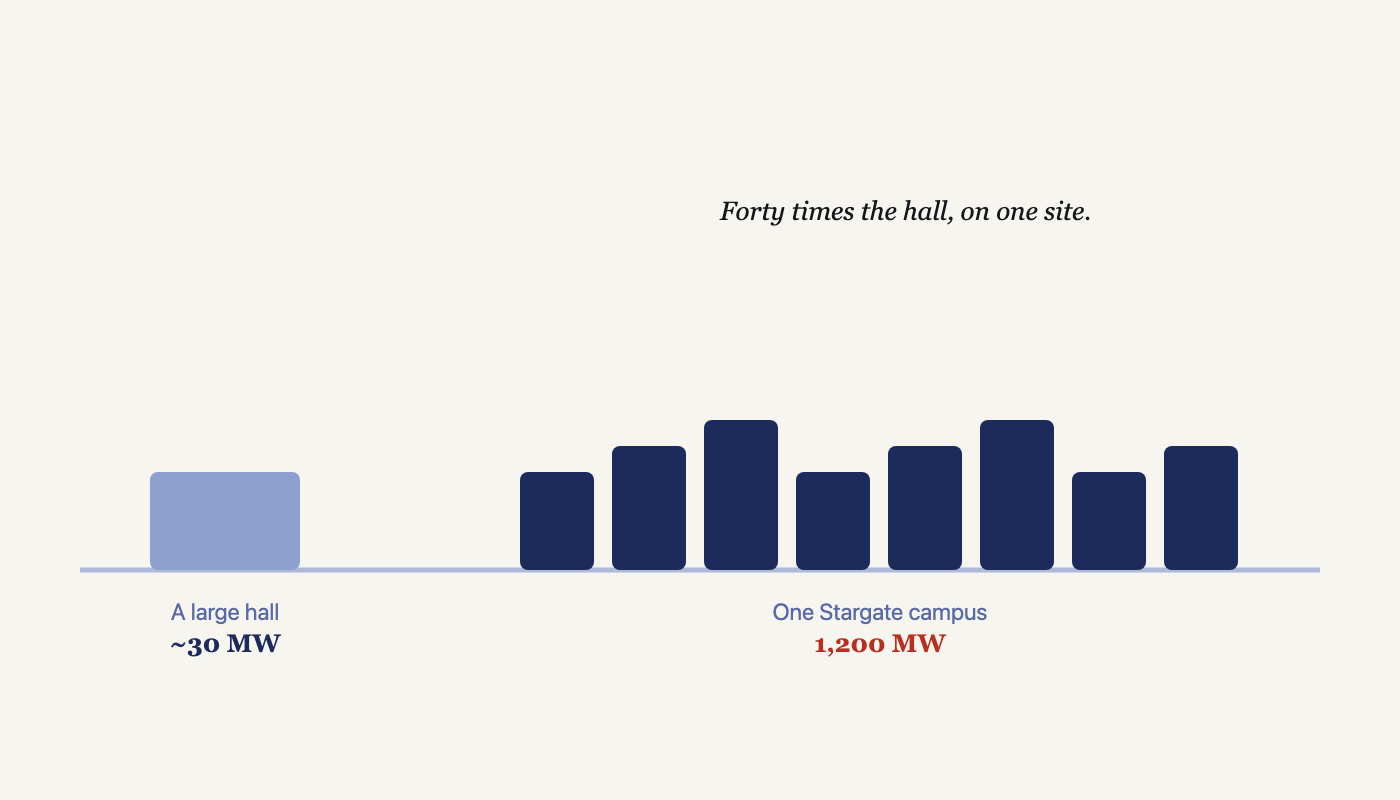
That single number sets everything else: the size of the utility connection, how much battery sits between the grid and the floor, how thick the busbar overhead has to be. New halls are planned in megawatts, not square metres, and Stargate is the clearest demonstration of why.
What is actually built
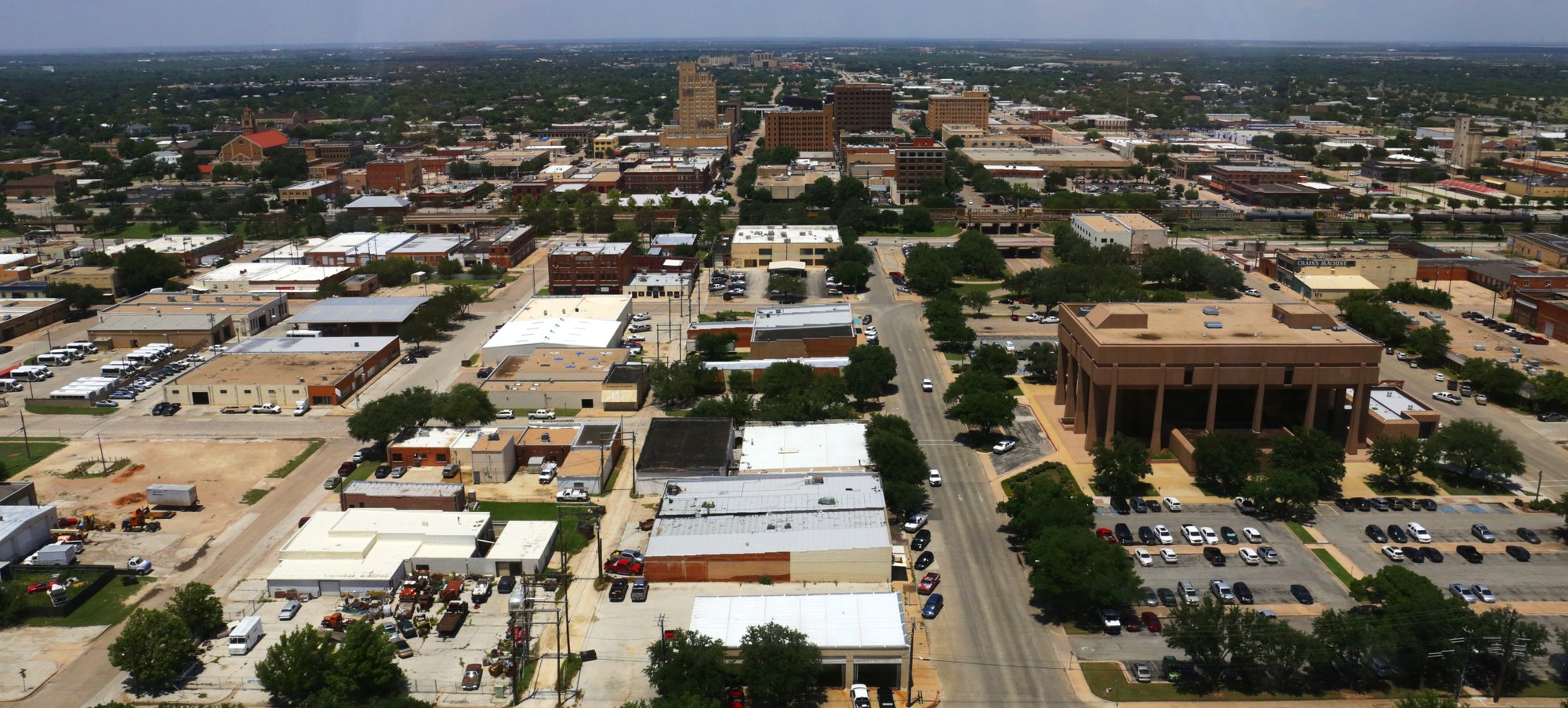
Abilene is the furthest along. Reporting through 2026 describes roughly half of its eight planned buildings running, with the full 1.2 GW expected around the end of the year. Oracle's own delivery tracker put about three quarters of the campus capacity delivered by September 2026. At full build it is around four million square feet and more than 450,000 Nvidia GB200 accelerators.
The wider programme has moved more slowly than the announcement implied. OpenAI has said over $400 billion of the commitment is in play and that planned capacity sits somewhere near seven to eight gigawatts, against the original ten. Whether that is a shortfall or a schedule depends on who is describing it.
All of it comes back out as heat
A campus drawing 1.2 GW is also rejecting close to 1.2 GW of heat, continuously. Nothing is stored. That is why the cooling plant is not an accessory to the building — at this scale it substantially is the building, and why siting decisions turn on water and climate as much as on land price.
The parts that are not engineering
Two of the more revealing setbacks had nothing to do with chips. In March 2026 New Mexico's Land Office blocked a pipeline that would have carried natural gas to Project Jupiter, a 2.45 GW site on the southern border. And more than a year after launch, the venture has reportedly been slowed by disputes among the partners over who owns and controls the sites, with OpenAI signing separate agreements with cloud providers in the meantime.
Neither is a technology problem. Both are the ordinary friction of building heavy industry: land, permits, fuel, and who holds the deed. The compute is the easy part to buy.
Why it matters to a laptop
Every answer you get from a large model is a round trip to a building like this. The queue you wait in, the price you are charged, and whether the thing is available at all are decided by concrete poured in west Texas eighteen months earlier.
There is a version of this story that is about ambition and a version that is about substations. The second one explains more.