
What a neural network actually learns.
It is not a brain and nothing inside it understands anything. It is a very large pile of numbers that gets nudged, over and over, until it stops being wrong so often.
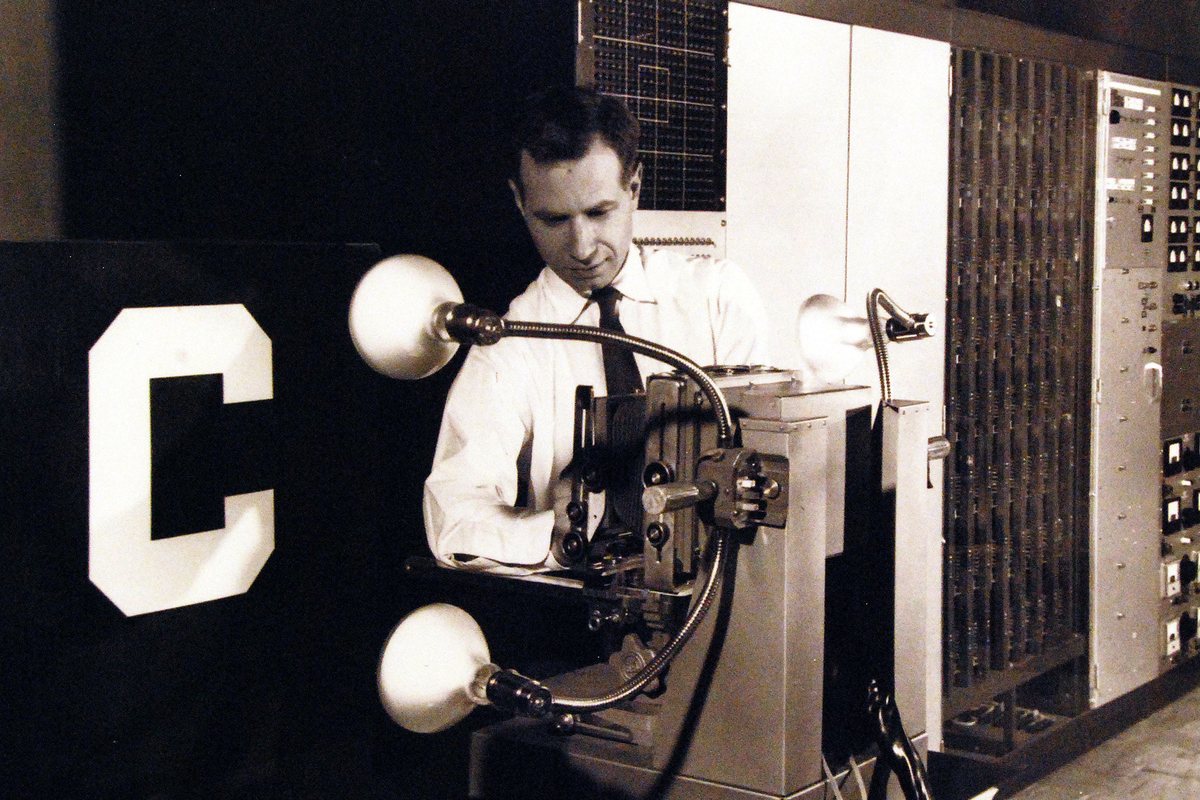
In 1958 a psychologist named Frank Rosenblatt built a machine at the Cornell Aeronautical Laboratory, on United States Navy money, that could learn to tell one shape from another. It was called the Mark I Perceptron, and it was furniture.
Four hundred photocells stood in for an eye. The connections between them had adjustable strengths, and those strengths were not software — they were potentiometers, dials, turned by small electric motors as the machine got things wrong and corrected itself. You could stand in the room and watch a neural network learn, audibly.
The press of the day was not restrained. Contemporary reports relayed Navy expectations that such machines would before long walk, talk, see, write, reproduce themselves and be aware of their own existence. That was sixty-eight years ago.
What the “neuron” actually does
A neuron in one of these networks is not mysterious. It takes some numbers in, multiplies each by a weight, adds them up, and passes the total through a simple rule that decides how strongly to pass it on. That is the whole of it. The word neuron is a metaphor, and a loose one.
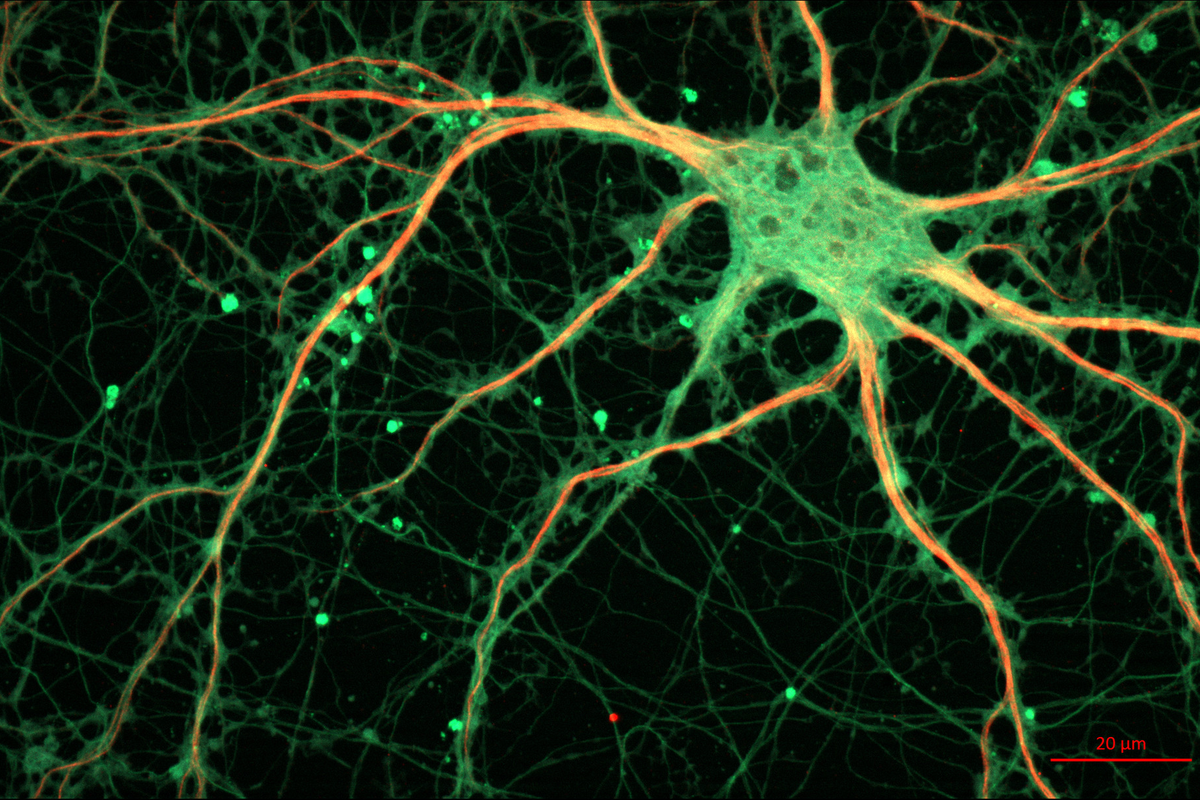
Learning means adjusting the weights. The network makes a guess, the guess is compared with the right answer, and every weight is shifted a little in whichever direction would have made the error smaller. Repeat a few billion times. There is no step at which understanding occurs.
The twelve years it all stopped
In 1969 two researchers, Marvin Minsky and Seymour Papert, published a book with a proof in it. One layer of these units could not learn even very simple rules.
Their famous example: it could not learn “one or the other, but not both”. Funding collapsed, and the field went quiet for more than a decade.
The fix was already conceivable: stack the layers. The problem was that nobody had a practical way to work out how much each weight in a deep stack was to blame for the final error. That arrived properly in 1986, as backpropagation, and everything since is a consequence of it.
The idea to take away
Every model you read about — the ones writing code, passing exams, filing patents — is the Mark I Perceptron with more layers, more numbers and vastly more electricity. The architecture got cleverer and the scale got absurd, but the mechanism underneath is still a pile of weights being nudged away from error. When somebody tells you a model understands something, they are making a claim the machinery does not support.
■